
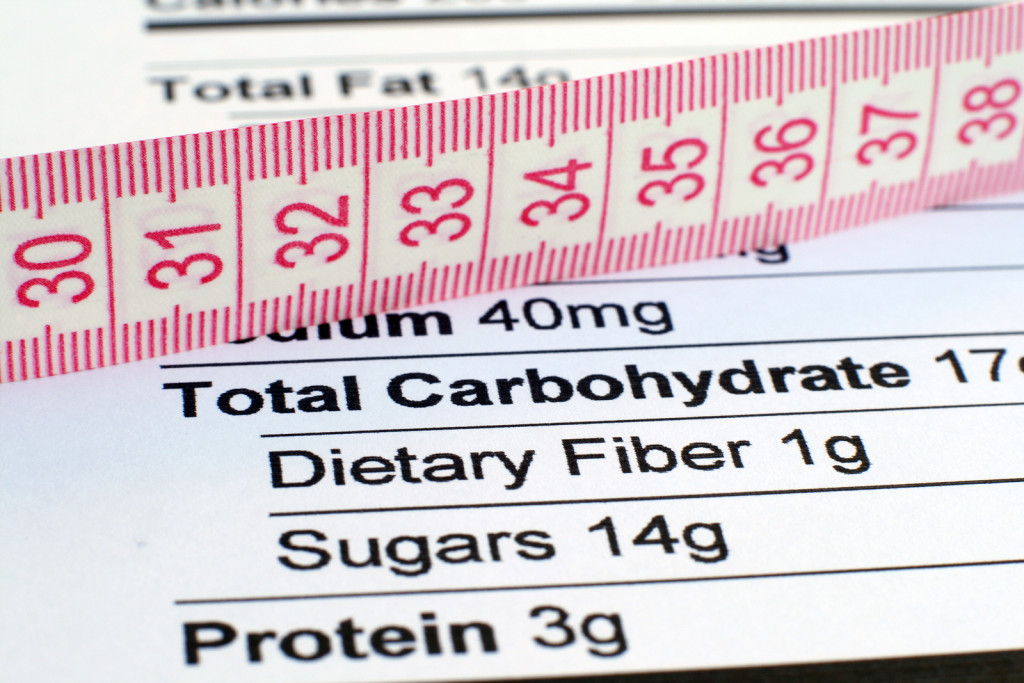

Carbohydrates are further classified as either simple and complex. Understanding those two terms, simple vs complex will help you make better food choices.
Simple Carbohydrates when consumed are digested rapidly and cause your blood sugar level to rise e quickly. Hence why after eating a sweets you get a sudden burst of energy. Unfortunately, after eating such foods, your blood sugar falls and that fall leads to sudden fatigue which prompts you to feel hungrey and you are more likely to choose a meal that is a simple carbohydrate. Thus if you continue to eat simple carbohydrates you will be caught in a vicious cycle which will lead to weight gain and also increase your risk for illnesses such as Diabetes and High cholesterol.
Complex Carbohydrates on the otherhand are digested slower and cause a slower rise in your blood sugar. Thus leaving you feeling fuller longer.
Let’s go back to the types of carbohydrates:
- Sugar: Sugar is the simplest form of carbohydrates. Sugar is naturally found in fruits, vegetables and milk products. Processed foods such as cakes, cookies and soda have added sugar. Added sugar is what we generally think of as table sugar. Foods with added sugar tend to be simple carbohydrates that raise your blood sugar quickly. Recall this this the sugar that generally causes weight gain and increases your risk for illness.
- Starch: Starch is a complex carbohydrate. Starches are found naturally in vegetables, grains and beans. Again complex carbohydrates raise your blood sugar slowly thus leaving satiated longer.
- Fiber: Fiber is another complex carbohydrate, generally it is plant based. It too is found naturally in fruits, vegetables, whole grains and beans. Unlike starch and sugar, fiber is not absorbed by your body. Fiber is classified as either soluble or insoluble. Soluble fiber dissolves in water whereas insoluble fiber does not. Insoluble fiber adds bulk to your stool and prevents constipation. Soluble fiber tends to slow down the digestive process thereby making you feel full longer. Also, research suggests that soluble fiber decreases cholesterol and blood sugar levels. Fiber is great because it makes you feel full, so you are less likely to overeat.
It is generally recommended that your total carbohydrate intake account for no more than 45 to 65 percent of your total daily calories. Carbohydrates have 4 calories per gram. Thus for a 2,000 calorie-a-day diet, this amounts to 900 to 1,300 calories per day, or about 225 to 325 grams. Also, women are advised to get 22 to 28 grams of fiber per day and men should get 28 to 34 grams per day. Remember fiber is great because it makes you feel full longer, so you are less likely to overeat, thus helps you lose weight.
So we have established that carbohydrates are classified as either sugar, starch or fiber. Also, we have established that carbohydrates occur naturally in foods, thus are nearly impossible to avoid. The key is understanding that not all carbohydrates are equal, meaning some carbohydrates provide little nutritional value. Simple carbohydrates tend to be found in processed or highly refined foods such as cakes, cookies or ice cream. Complex carbohydrates are found in whole foods such as grains and vegetables. Complex carbohydrates are nutrient dense and end to be low in calories. When ever possible it is always better to limit foods that are processed. As an example it is better to have whole fruit instead of fruit juice.
Tune in to Part 4 of KNOW YOUR NUTRITION LABEL series where I will discuss Protein.
by Marjorie Binette, MD