
Breast Cancer is the second leading cancer in American women, it is second only to skin cancer. Breast Cancer is also the second leading cause of cancer related deaths, second only to lung cancer. An estimated 40,290 women will die from the disease this year. African American women have the highest risk of dying from breast cancer. If you can identify the signs and symptoms early, you can decrease the probability of developing advanced-stage breast cancer, thereby increasing your survival rate. Hence why you need to know the signs, symptoms and risk factors of breast cancer.
Risk Factors
Most women who are diagnosed with breast cancer have no risk and have no history of the disease in their families. Although, that is the case, it is still important to know what increases your risk for developing breast cancer. Here is a list of factors that increase your risk:
- Being a female. Women are more likely than men to develop breast cancer.
- Increasing age. Most cases of breast cancer occur in women 50 years of age or older.
- Personal history of breast cancer. If you’ve had breast cancer, you have a higher risk of having it again.
- Family history. Having a first degree relative(mother, sister or daughter) with breast cancer increases your risk.
- Genetic predisposition. Gene mutations BRCA1 and BRCA2 can increase your risk for developing breast cancer.
- Postmenopausal hormone therapy.
- Radiation Exposure.
- Obesity
- Early age of onset of your period
- Beginning menopause at an older age
- Having your first child at an older age
- Having never been pregnant.
- Drinking alcohol.
Signs and Symptoms
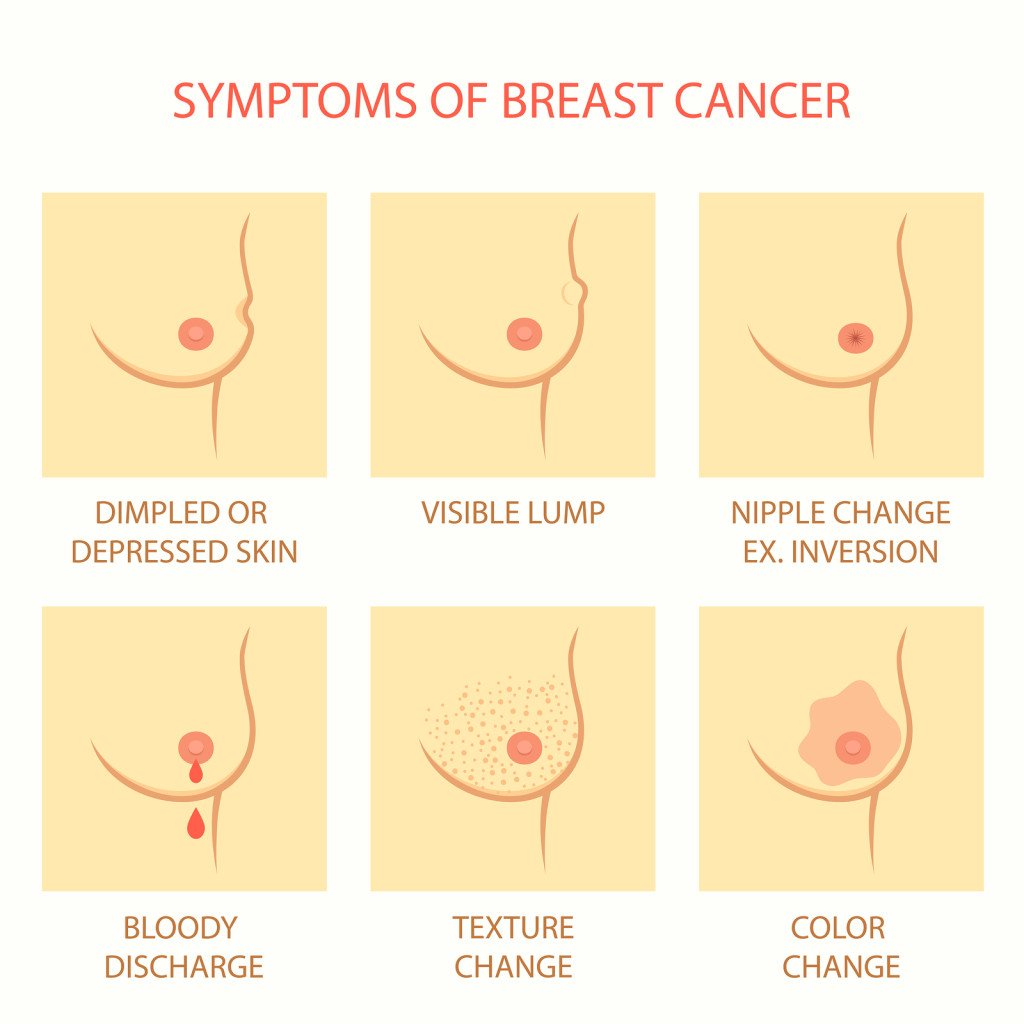
Many women who are diagnosed with breast cancer have no signs or symptoms. By no means is this list exhaustive, so talk to your doctor about any change that you experience or any change that worries you. Here is a list of signs or symptoms some women may experience:
- Dimpling, retracted or depressed skin.
- A visible lump.
- Palpable lump in the breast or underarm.
- A change in the size or shape of the breast.
- Pain in any area of the breast.
- Blood discharge from your nipple.
- A change in the nipple. A nipple that becomes inverted is an example.
- A change in the color of the breast.
- A change in the texture of the breast.
Doc, what can I do to reduce my risk of breast cancer?
Here is what the CDC says you can do to decrease your risk:
- Keep a healthy weight
- Exercise regularly(150 minutes of moderate activity per week)
- Get enough sleep.
- Don’t drink alcohol, or limit alcoholic drinks to no more than one per day.
- Avoid exposure to chemicals that can cause cancer.
- Try to reduce your exposure to radiation.
- Avoid hormone replacement therapy.
- Breastfeed your babies. Breastfeeding lowers your estrogen and progesterone levels.
Summary
Knowing the signs, symptoms and risk factors of breast cancer can lead to early detection. Identifying disease early can save your life.
Stay tuned for more topics related to Breast Cancer Awareness. In the next series of articles, we will talk more about BRCA1 and BRCA2 gene mutations and breast cancer screening.